What Is Cabinet Refacing and How Does It Work?
Cabinet refacing replaces doors, drawer fronts, and veneers over your existing boxes for a new look at a fraction of the cost.
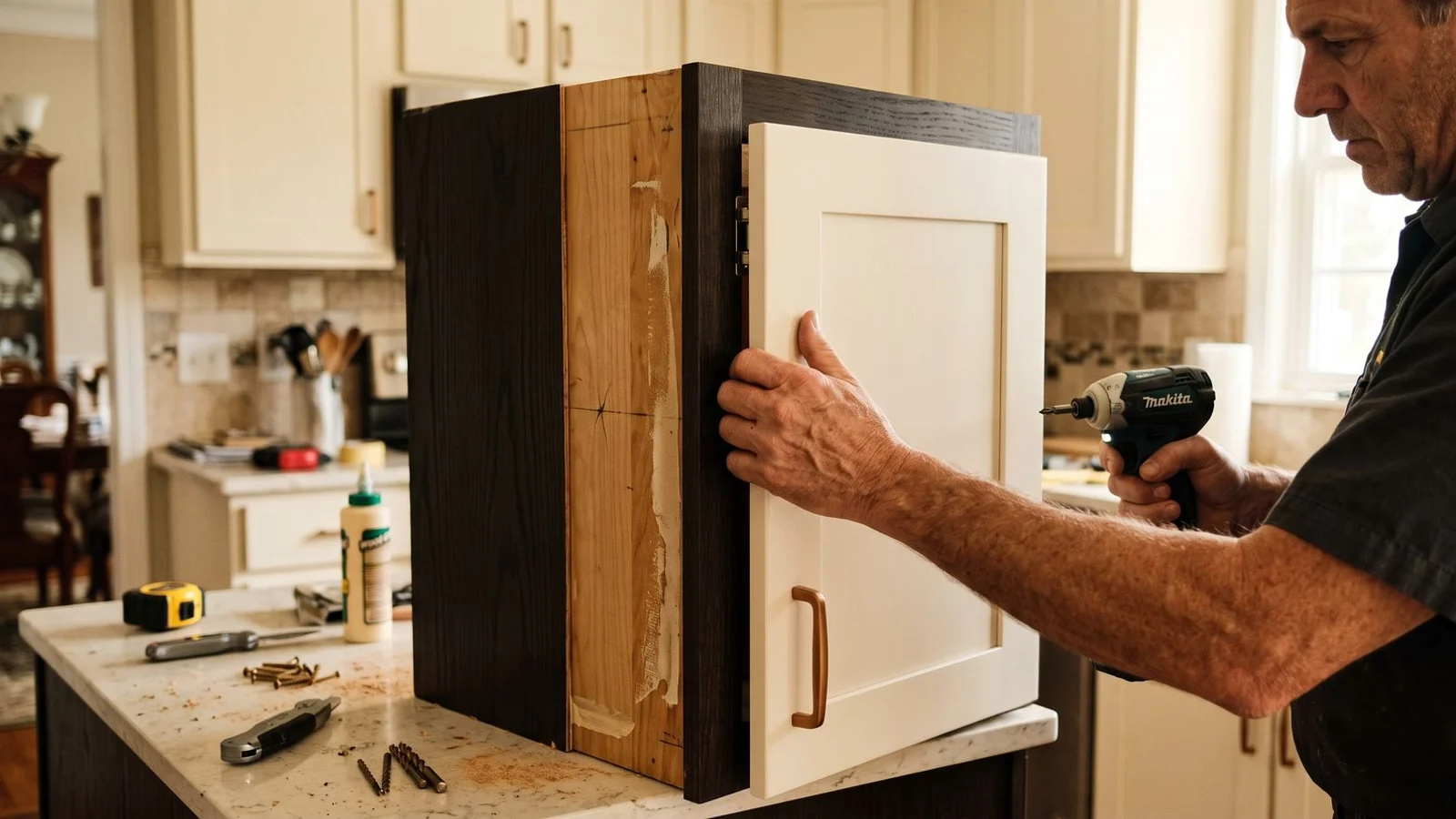
Cabinet refacing is the fastest, most cost-effective way to give an outdated kitchen a brand-new look. If you’ve heard the term and want to know exactly what it involves — what stays, what changes, and whether it’s right for your kitchen — this guide walks through it.
The plain-language definition
Cabinet refacing keeps your existing cabinet boxes in place and replaces the surfaces you can see. That means:
- New cabinet doors — in your choice of style, wood, and finish.
- New drawer fronts — matching the doors.
- New veneer applied to the exposed exterior faces of the cabinet boxes (sides, gable ends, toe kicks).
- New hardware — pulls, knobs, and often upgraded soft-close hinges and glides.
Your existing cabinet boxes — the actual structural cabinet frames attached to your walls — stay right where they are. Because 60-70% of the cost of new cabinets goes into the boxes and installation, refacing typically saves 30-50% versus a full replacement.
What stays vs what changes
Stays:
- Cabinet box frames
- Cabinet position and layout
- Cabinet dimensions
- Wall attachments
- The plumbing and electrical inside the walls
Changes:
- Doors (any style: shaker, slab, raised panel, glass-front)
- Drawer fronts (matching the doors)
- Exterior veneer (matches the new doors)
- Hardware (pulls, knobs, hinges, glides)
- Optional: soft-close hinges and glides
- Optional: pull-out shelving retrofits, lazy susans, drawer organizers
Who refacing suits
Cabinet refacing works well when three things are true:
-
Your cabinet boxes are structurally sound. No water damage, no warping, no rot, no failing joints. Solid-wood or high-quality plywood boxes from the 1960s onward are usually candidates. MDF or particleboard boxes with water damage generally aren’t.
-
You’re happy with the current layout. Refacing doesn’t change where cabinets sit. If you want to move the sink, add a run of cabinetry, or change the footprint, replacement is the better call.
-
You want a new look on a budget. Refacing delivers the visual transformation at 30-50% less than replacement. It’s the smart choice when the boxes are working and the surfaces are what’s dated.
If any of those don’t apply — boxes are shot, layout doesn’t work, or you’re planning major structural changes anyway — full cabinet replacement is the better path.
The refacing process, step by step
-
Free in-home consultation. We inspect your existing cabinet boxes, measure, and confirm refacing is a fit. We show you door style and finish options in real samples.
-
Design and material selection. You pick door style, wood or laminate, finish color, veneer to match, hardware, and any storage upgrades.
-
Fabrication. Doors, drawer fronts, and veneer material are fabricated to your exact dimensions.
-
Installation. Our in-house carpenters remove old doors and hardware, apply new veneer to the exterior box faces, install new doors and drawer fronts, and add new hardware. Typical install: 3-5 days.
-
Walkthrough. We do a punch-list walkthrough with you before we call it done.
The 3-5 day timeline
Because the boxes stay in place, refacing takes days, not weeks. Most projects wrap in 3-5 days. Your kitchen is fully usable during the process for most of that time — the only real disruption is during actual door and hardware install.
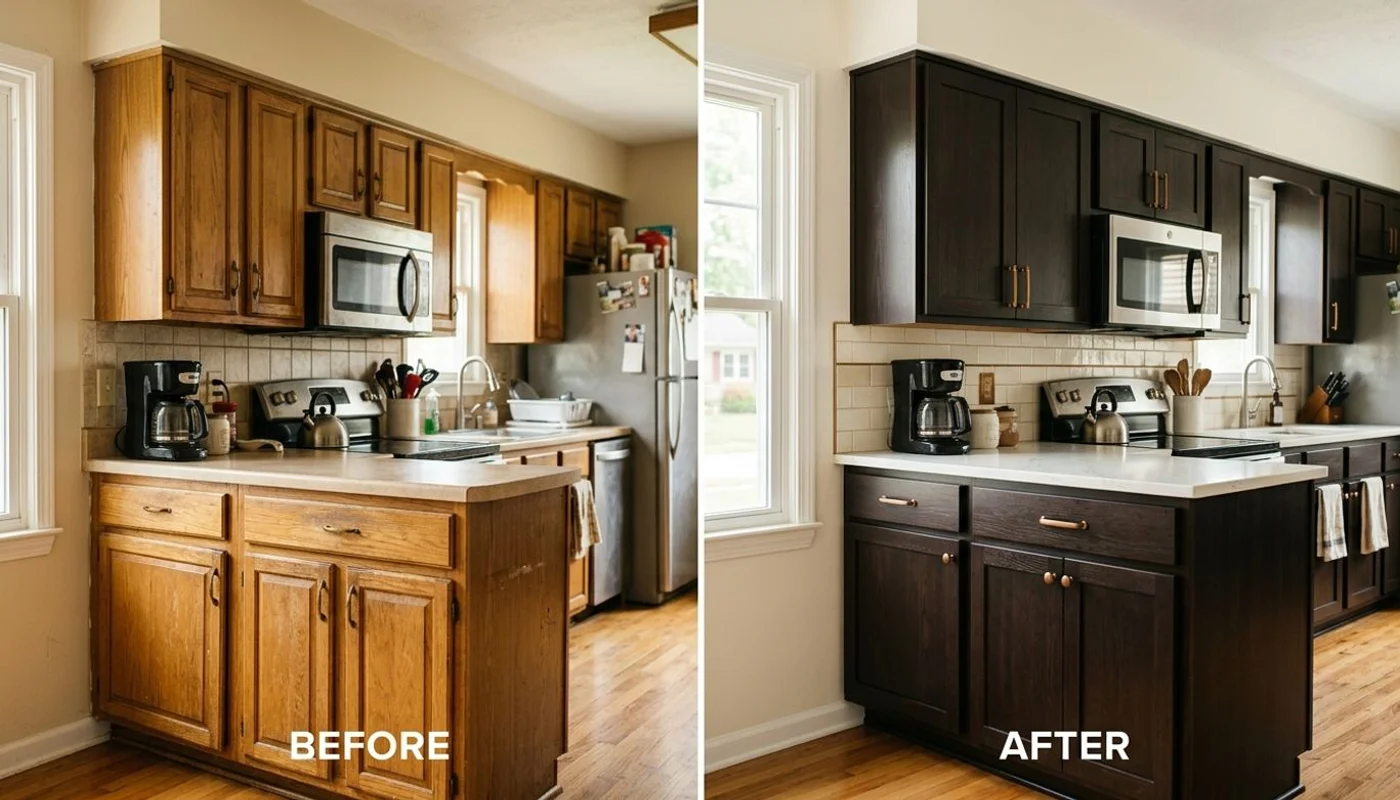
What a refacing project looks like finished
Between new doors, matching veneer, and updated hardware, a refaced kitchen is visually indistinguishable from a new install. Most homeowners’ friends and family don’t realize refacing was involved — they just see “you got a new kitchen.” Learn more about our cabinet refacing service and the finishes we offer.
For a deeper look at whether refacing or a full replacement is right for you, see our refacing vs full replacement guide. Or book a free consultation and we’ll assess your specific kitchen honestly.
Frequently Asked Questions
What exactly gets replaced in cabinet refacing? +
Doors, drawer fronts, and the visible veneer surfaces on the cabinet exteriors. Your existing cabinet boxes stay in place. Hardware is also updated during refacing — soft-close hinges, glides, and new pulls.
Does refacing look like new cabinets? +
Yes. Between new doors, drawer fronts, matching exterior veneer, and updated hardware, refaced cabinets are visually indistinguishable from a new install. Most homeowners are surprised how dramatic the transformation is.
Is my kitchen a good candidate for refacing? +
If your cabinet boxes are structurally sound (no water damage, no warping, no failing structure) and you're happy with the current layout, refacing is usually a strong candidate. We confirm during the free in-home consultation.