Cabinet Refacing Materials: Wood vs Laminate vs Thermofoil
Compare wood, laminate, thermofoil, and MDF for cabinet refacing by look, durability, and cost, and how to pick the right finish.
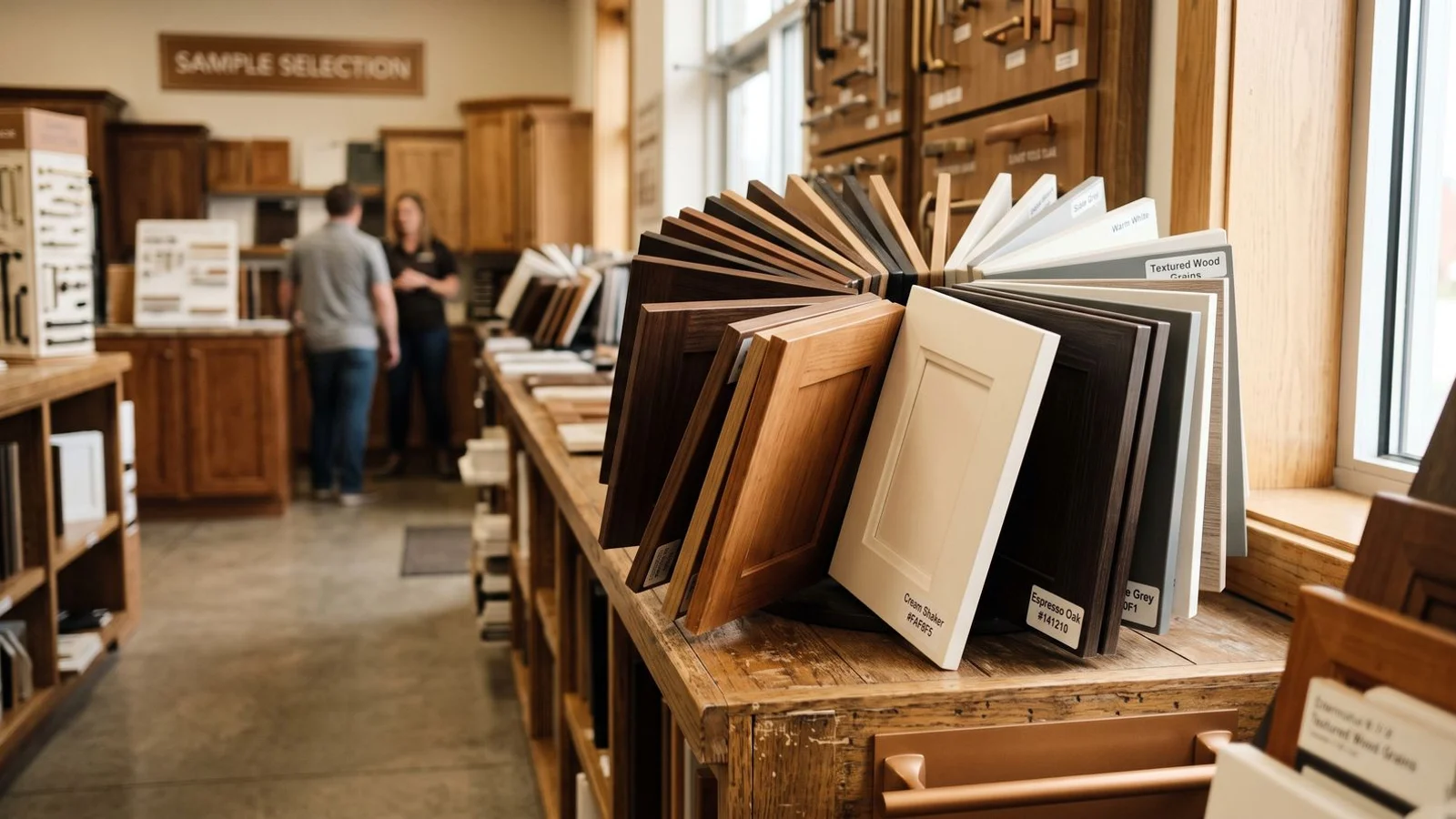
We know that selecting cabinet refacing materials is often the hardest part of a kitchen renovation. The experts at Columbus Kitchen Pros design spaces that balance your desired look, daily durability needs, and budget.
Recent 2026 data shows the average Columbus kitchen refacing project costs around $7,230, making this a major financial decision. Most homeowners struggle to choose between options like wood vs laminate cabinet refacing without professional guidance.
Our team will break down the four main materials we install locally, showing you exactly how they perform in real kitchens. This guide provides clear comparisons to help you choose the best finish for your home.
The four main options
The four main cabinet refacing materials are solid wood, wood veneer, thermofoil, and high-pressure laminate. Each material offers a distinct mix of price, visual appeal, and structural construction.
We source these materials from industry-leading manufacturers to ensure quality for Central Ohio homeowners. Solid wood doors often come from premium suppliers like Conestoga Wood Specialties.
Brands like Wilsonart and Formica provide high-pressure laminate surfaces. Our installers work with these specific products weekly, and this daily installation work reveals exactly how each material is built.
- Solid wood: Real wood doors come in your choice of species like maple, cherry, oak, hickory, or walnut. This warm, character-rich material is infinitely refinishable and stands as the most premium option.
- Wood veneer over MDF: This features an MDF core with a thin real-wood veneer. It looks just like solid wood but costs less and is much more dimensionally stable.
- Thermofoil: This material features a vinyl film heat-sealed onto an MDF core at temperatures around 150 to 160 degrees Fahrenheit. It is smooth, uniform, and exceptionally easy to clean.
- High-pressure laminate: This option applies a printed laminate layer over an MDF or particleboard core. It is highly durable and represents the most affordable option.
Head-to-head: look and feel
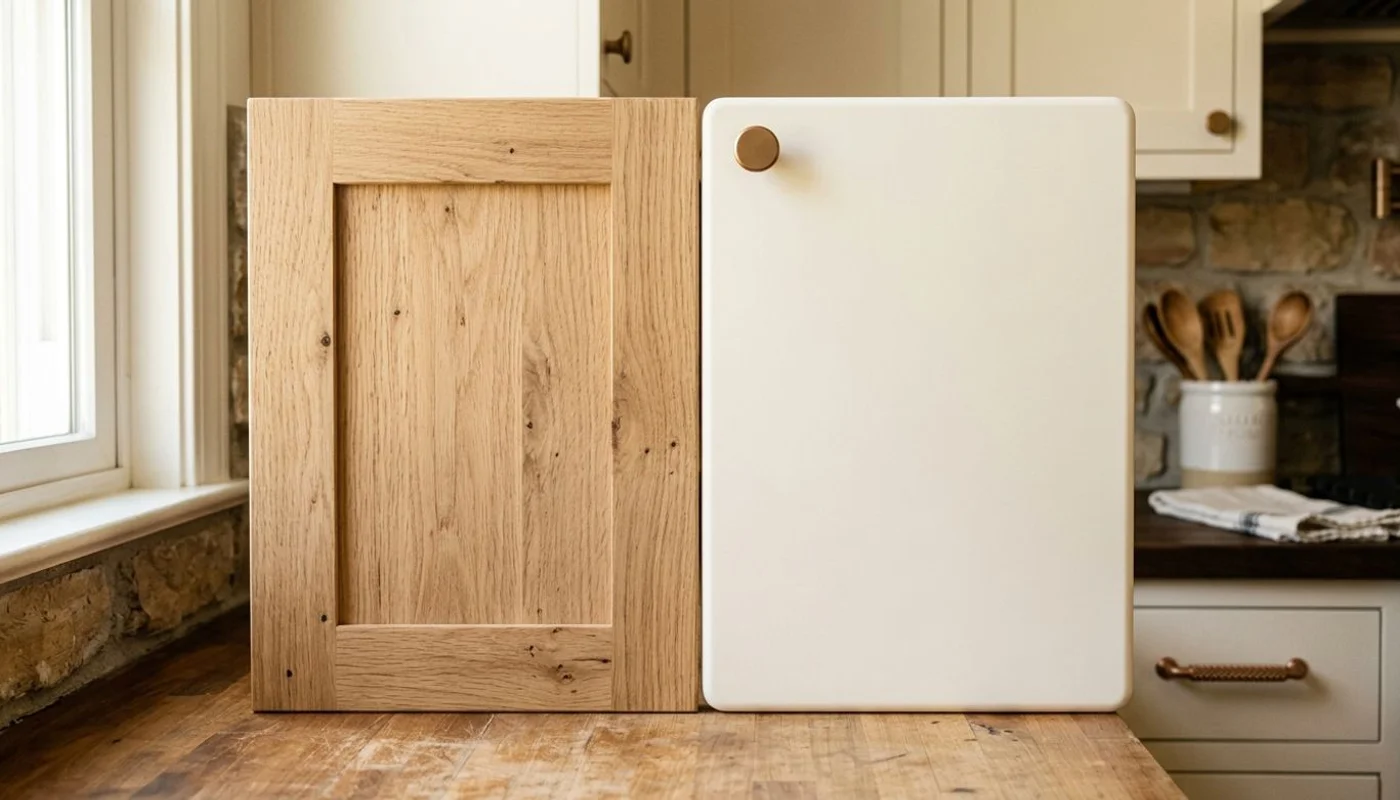
When comparing look and feel, solid wood offers authentic grain depth, while thermofoil and laminate provide smooth, continuous finishes. Wood veneer bridges the gap by offering real wood texture at a lower price point.
We find that the right aesthetic choice depends entirely on whether you want a natural stain or a crisp painted style. For a painted white shaker door, thermofoil and painted wood veneer look nearly identical from three feet away.
This visual similarity saves many homeowners significant money. Our clients often choose thermofoil over painted wood because the factory finish is incredibly consistent, giving you the exact same pristine color on every single door.
- Solid wood: Real grain offers real warmth and depth. Nothing else matches this material if you love the authentic look of nature.
- Wood veneer: This option reads as authentic because it actually features real wood on top. It is perfect when you want that organic look at a lower price than solid boards.
- Thermofoil: The finish provides a smooth, continuous painted look. It lacks the deep grain of natural lumber but reads as a high-quality painted surface.
- Laminate: Manufacturers offer a wide range of visual options, including convincing wood-look prints. It lacks the premium painted feel of thermofoil but remains hugely versatile.
Head-to-head: durability
Solid wood and laminate deliver the highest durability, easily resisting daily kitchen wear. Thermofoil is prone to heat damage, while wood veneer can chip upon hard impact.
We specify different materials based on your kitchen layout and cooking habits. Thermofoil features a vinyl layer that can delaminate if exposed to sustained temperatures above 150 degrees Fahrenheit.
This heat sensitivity makes it a poor fit for cabinets flanking an oven or range. Our installers mandate metal heat shields for any thermofoil doors placed near high-heat appliances.
These inexpensive metal strips protect the adhesive bond from self-cleaning oven cycles.
- Solid wood: This material offers the highest durability with proper finishing. It handles heat, humidity, and daily kitchen use for decades, plus you can refinish it if damage occurs.
- Wood veneer: The surface is durable for daily use. A heavy impact can chip the thin top layer, and it is not as easily refinished as solid boards.
- Thermofoil: Normal use rarely damages this material, but heat sensitivity remains a critical issue. Sustained heat causes the vinyl to peel away from the MDF core.
- Laminate: This surface is highly durable and resists heat and moisture exceptionally well. It handles almost all typical kitchen conditions without failing.
Head-to-head: cost
Laminate is the most affordable cabinet refacing material, while solid wood is the most expensive. Thermofoil and wood veneer sit in the middle, offering a balance of quality and value.
We constantly review pricing data to give Columbus homeowners accurate budget expectations. A standard kitchen refacing project in Ohio averages around $7,230 in 2026.
Large 10x10 custom kitchens with premium materials can push that cost up to $23,000. Our estimates break down the rough relative pricing for installed materials.
These baseline comparisons help you allocate your renovation funds effectively.
| Material | Price Relative to Laminate | Estimated Project Range |
|---|---|---|
| Laminate | Baseline (Most Affordable) | $4,500 - $6,500 |
| Thermofoil | 5-15% Above Laminate | $5,000 - $7,500 |
| Wood Veneer (Painted) | 15-25% Above Laminate | $6,000 - $8,500 |
| Solid Wood | 25-50% Above Laminate | $7,500 - $11,000+ |
The savings from choosing thermofoil over solid wood on a full kitchen can equal $1,500 to $3,000. That money makes a meaningful difference if it goes toward better hardware, quartz counters, or a new tile backsplash.
Head-to-head: maintenance
Thermofoil and laminate require the least maintenance, needing only a quick wipe with mild detergent. Solid wood and wood veneer demand specialized wood cleaners to protect their finishes.
We always ask clients how much time they want to spend cleaning their kitchen. Low-maintenance living makes thermofoil and laminate the clear winners.
Wood veneer requires extra care because the top layer is only about 1/40th of an inch thick. Our service team warns against using harsh abrasive pads on any of these surfaces.
Scratching the protective clear coat will ruin the appearance of both natural and manufactured doors.
| Material | Recommended Cleaning Method | Refinishability |
|---|---|---|
| Solid wood | Wipe with a damp cloth and occasional wood cleaner. | Fully refinishable if damaged. |
| Wood veneer | Use specific wood cleaners; avoid aggressive scrubbing. | Hard to refinish due to thin 1/40-inch top layer. |
| Thermofoil | Wipe clean with mild detergent and water. | No sealing or refinishing possible. |
| Laminate | Wipe clean; can handle slightly harsher cleaners. | No refinishing possible. |
Full-overlay styling
Full-overlay styling means the doors and drawer fronts cover nearly the entire cabinet box face. All four refacing materials can be finished in this modern style with narrow reveals.
We consider this the default look for contemporary kitchen updates. This technique hides visible face frames and instantly makes any material appear more premium.
Replacing old exposed hinges with hidden soft-close hardware is a necessary part of this upgrade. Our carpenters use precise measurements to ensure the tightest possible gaps between doors.
A modern full-overlay setup provides a clean, custom-built aesthetic regardless of the surface material you choose.
Pro Tip: Upgrading to hidden soft-close hinges during a full-overlay reface is the most cost-effective way to make older cabinet boxes feel brand new.
Which material do we recommend most?
We recommend thermofoil for painted-look kitchens and solid wood for stained-wood designs. These two paths offer the best return on investment for our Central Ohio cabinet refacing projects.
Thermofoil doors hit the sweet spot for a clean, uniform, and cost-effective painted aesthetic. Our team helps homeowners evaluate these choices during in-home consultations.
Combining a painted finish with quartz counters reads as a fully modern kitchen.
Real lumber is absolutely worth the incremental cost if you value authentic organic textures. Our designers suggest solid wood or wood veneer when you want the warmth and character of a natural stain.
Laminate remains a strong budget option, while solid wood stands as the ultimate premium choice. For a deeper look at durability specifically, see our are refaced cabinets durable guide.
Or book a free consultation to view physical samples of every material in your own kitchen’s lighting.
Frequently Asked Questions
Which refacing material is most durable? +
Solid wood and quality thermofoil laminates are both highly durable when properly installed. Solid wood handles heat and moisture well; thermofoil is easy-clean but heat-sensitive near ovens.
What is thermofoil? +
Thermofoil is a vinyl film heat-sealed onto an MDF core. It gives a seamless, easy-clean finish at lower cost than solid wood. Popular for shaker and slab door styles in white or neutral colors.
Can I match a specific color? +
Yes. Solid wood can be stained or painted in nearly any color. Laminate and thermofoil come in wide color ranges. Custom paint matches are available for premium projects.