Kitchen Countertop Materials Compared
Compare quartz, granite, marble, and butcher block by look, durability, maintenance, and cost to find the best countertop.
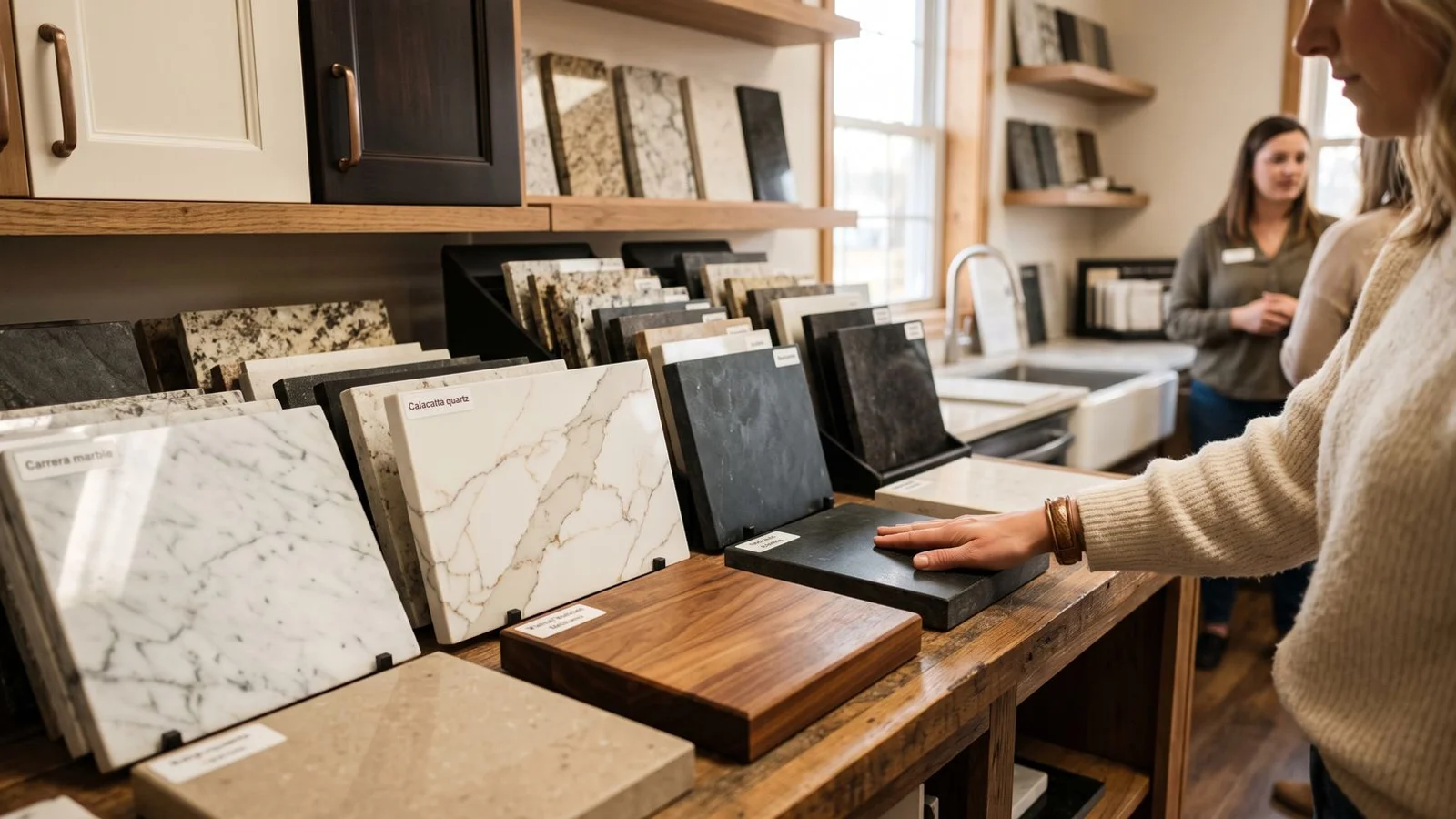
From what we have observed across hundreds of local kitchen remodels, the countertop completely dictates the daily function of your space.
Countertops are the most-touched surface in your home and serve as the primary visual anchor for the room.
Our team knows that choosing the right stone shapes both how the kitchen looks and how it physically holds up to daily cooking.
To help you find the best kitchen countertop material, we have all the main kitchen countertop materials compared directly against each other below.
The four main kitchen countertop materials compared
Understanding the fundamental makeup of each surface makes your decision much easier.
Each option brings distinct physical properties to your daily prep zones.
We regularly install all four of these material categories for homeowners in 2026.
Here is a straightforward breakdown of the materials themselves:
- Quartz: This is an engineered stone made from ground natural quartz bound with polymer resin. It is completely non-porous and available in a wide range of designs, including highly convincing marble and concrete styles.
- Granite: This natural stone features entirely unique mineral patterns and colors. It offers real depth and character that no manufactured material can perfectly replicate.
- Marble: Famous for its soft veining and classic appearance, marble is a natural, calcite-based stone. That beauty requires more maintenance because the stone is much softer and more porous than granite.
- Butcher Block: Solid wood tops are typically crafted from hard maple, walnut, or cherry. These create a warm, workable surface that is designed for actual prep work rather than just visual display.
Head-to-head: look
Visual appeal often drives the initial countertop choice.
Modern manufacturing and finishing techniques have drastically changed what is available right now.
Our clients usually have a specific aesthetic in mind before they ever step into a stone yard.
Surface Aesthetics
- Quartz: These slabs offer clean, uniform coloring and precise patterns. Modern quartz options that mimic marble are visually convincing from just three feet away, and matte finishes are currently outpacing high-gloss polishes in local design trends.
- Granite: Every single slab is a completely unique piece of earth. Granite provides deep, natural character that reads as premium, and leathered finishes are highly popular right now for a textured, glare-free appearance.
- Marble: This stone delivers the definitive classic luxury look. Nothing else perfectly captures its soft, warm veining, and it develops a natural patina as it ages.
- Butcher Block: Wood introduces rich, organic warmth into a room. It accents beautifully against cool stone counters when placed on an island.
Head-to-head: durability
Durability determines how cautiously you need to act in your own kitchen.
We rely on the Mohs hardness scale to accurately compare scratch resistance across different materials.
This objective 1-to-10 measurement helps predict how a surface will handle dropped pans and sharp knives.
Hardness and Heat Ratings
- Quartz: Registering a 7 on the Mohs scale, quartz is extremely durable for daily use. It is non-porous, stain-resistant, and hard to scratch, but its weak point is sustained heat. Always use trivets to avoid scorching the resin binders.
- Granite: Scoring between 6 and 8 on the Mohs scale, granite is naturally scratch-resistant and highly durable. It handles heat exceptionally well, allowing you to place pans up to 1200°F directly on the surface. Its primary weak point is porosity.
- Marble: Sitting much lower at a 3 or 4 on the Mohs scale, marble is significantly softer than granite and quartz. It is susceptible to scratching, staining, and etching from acidic foods like lemons and tomatoes.
- Butcher Block: Wood is durable but fully designed to accept wear and tear. Heavy impacts will dent the grain, but sanding and re-oiling easily restores the surface.
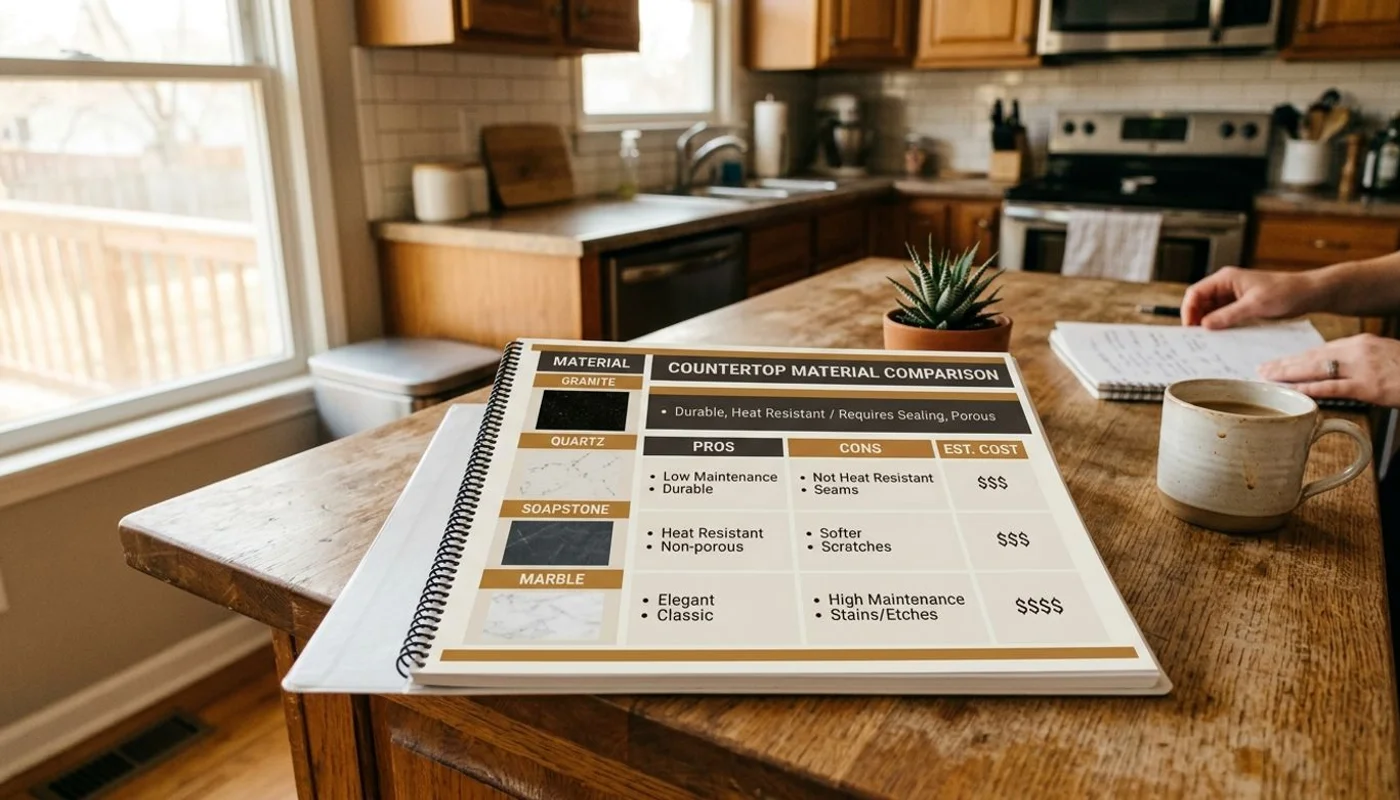
| Material | Mohs Hardness Scale | Heat Resistance | Best Trait |
|---|---|---|---|
| Quartz | 7 (High) | Low (Use Trivets) | Stain Resistance |
| Granite | 6 - 8 (High) | High (Up to 1200°F) | Scratch Resistance |
| Marble | 3 - 4 (Low) | Medium | Classic Aging |
| Butcher Block | N/A (Soft Wood) | Low | Easily Repairable |
Head-to-head: maintenance
The amount of time you want to spend caring for your kitchen should guide your material selection.
We always ask clients to be entirely honest with themselves about their cleaning habits.
A high-maintenance stone quickly loses its appeal in a busy household.
Cleaning and Sealing Requirements
- Quartz: A simple daily wipe with mild soap is all you need. This material requires zero sealing and no refinishing, resulting in effectively zero maintenance over its lifespan.
- Granite: Wipe the surface daily and apply a sealer annually or as needed. Professional-grade penetrating sealers, like Tenax Proseal Premium, create an invisible barrier against cooking oils and wine. Periodic polishing maintains the factory shine.
- Marble: Clean daily with a strict pH-neutral cleaner to prevent surface damage. You must address spills immediately because acidic liquids etch the calcite fast, and the stone requires sealing every 3 to 6 months.
- Butcher Block: Wipe daily with a damp cloth. You need to oil the wood monthly with food-safe mineral oil or a beeswax block conditioner, and sand it down every few years to refresh the grain.
For a fuller look at sealing, see our countertop maintenance guide.
Head-to-head: cost (installed, per sq ft)
Budget expectations vary wildly based on the stone grade, edge profiles, and the complexity of the installation.
We price jobs based on the exact slab chosen at the local supplier.
These figures represent the typical installed ranges in the Columbus market for 2026.
Current Regional Pricing
- Laminate (budget baseline): $15 to $30 per sq ft
- Butcher Block: $30 to $70 per sq ft
- Standard Granite: $40 to $80 per sq ft
- Standard Quartz: $65 to $90 per sq ft
- Premium Quartz: $90 to $130 per sq ft
- Premium/Exotic Granite: $80 to $150+ per sq ft
- Marble: $70 to $150+ per sq ft (highly variable by exact stone origin)
Prices include the raw material, templating, fabrication, standard edge profiling, and final installation.
Waterfall edges, complex edge profiles like an ogee cut, and unusual sink cutouts will add to the total project cost.
Best use case for each material
Matching the countertop to your lifestyle guarantees long-term satisfaction with your remodel.
Our design process always starts by identifying who cooks in the kitchen the most.
Different materials excel in very specific environments.
Lifestyle Recommendations
- Quartz: This is the ideal match for busy family kitchens, low-maintenance homes, and homeowners wanting a clean, modern aesthetic. It remains our most-installed surface material throughout Central Ohio.
- Granite: Heavy home cooks benefit greatly from the ability to place hot pans directly on the counter. It is also perfect for homeowners who desire authentic natural stone character without the fragility of marble.
- Marble: Reserve this for homes with lower kitchen traffic, or for homeowners who genuinely love a classic aesthetic and readily accept a lived-in patina. It works exceptionally well in dedicated accent applications like baking stations or bar tops.
- Butcher Block: Wood serves perfectly as an island top to provide a warm accent against cool stone perimeters. It also works flawlessly for dedicated prep zones or as full countertops in rustic design styles.
For a specific quartz vs granite decision, see our quartz vs granite guide.
Regional suppliers
Viewing full slabs in person is a mandatory step for any natural stone project.
We source premium materials from several established Central Ohio suppliers, including Mont Granite and Triton Stone.
Small sample squares never tell the full story of a slab’s true color variance.
For engineered quartz, the primary brands include Cambria, Silestone, Caesarstone, MSI, and other manufacturers offering wide selections.
Our team is happy to meet you directly at their Columbus yards to select specific slabs prior to fabrication.
This hands-on selection is especially critical for granite and marble, where every single slab features completely unique mineral deposits.
Combining materials
Using a single countertop type everywhere can sometimes make a large room feel visually flat.
Many homeowners actively combine two distinct materials to create visual depth in the room.
The contrast highlights the unique strengths of each surface.
A highly popular 2026 design trend pairs durable quartz or granite on the perimeter counters with a rich butcher block or soft marble island top.
This strategic placement adds immense visual interest while letting each material do exactly what it does best.
Our recommendation for most kitchens
If you remain unsure about which route to take, quartz serves as the safest, highest-value default for the majority of Central Ohio kitchens.
It looks fantastic in nearly any architectural style, resists heavy stains from busy family use, requires effectively zero maintenance, and strongly holds its resale value.
We point clients toward granite as the primary natural-stone alternative if they crave unique geological character and do not mind the simple annual sealing routine.
Marble and butcher block stand out as specialty choices.
They are undeniably beautiful, but they should not be your default selection unless you are prepared for their specific care requirements.
Ready to see and touch these kitchen countertop materials compared in your own home?
Our countertop installation service covers every single step from the initial selection to the final install.
Book a free consultation and we will bring physical samples for you to compare in your own kitchen’s lighting.
Frequently Asked Questions
What's the most low-maintenance countertop? +
Quartz is the most low-maintenance option. It's non-porous, never needs sealing, resists stains, and cleans up with mild soap and water. No annual maintenance required.
Which countertop is best for heavy cooking? +
Granite and quartz both handle heavy family kitchen use well. Granite tolerates hot pans directly; quartz can be damaged by sustained heat, so use trivets. Both resist knife cuts and daily wear.
Is marble practical for a kitchen? +
Beautiful but softer and more stain-prone than granite or quartz. Best for lower-traffic kitchens or homeowners who accept a patina developing over time. Regular sealing helps but doesn't fully prevent staining.