Planning a Kitchen Remodel in an Older Columbus Home
Century-old and historic Columbus homes bring layout, structural, and permitting challenges. How to modernize while preserving character.
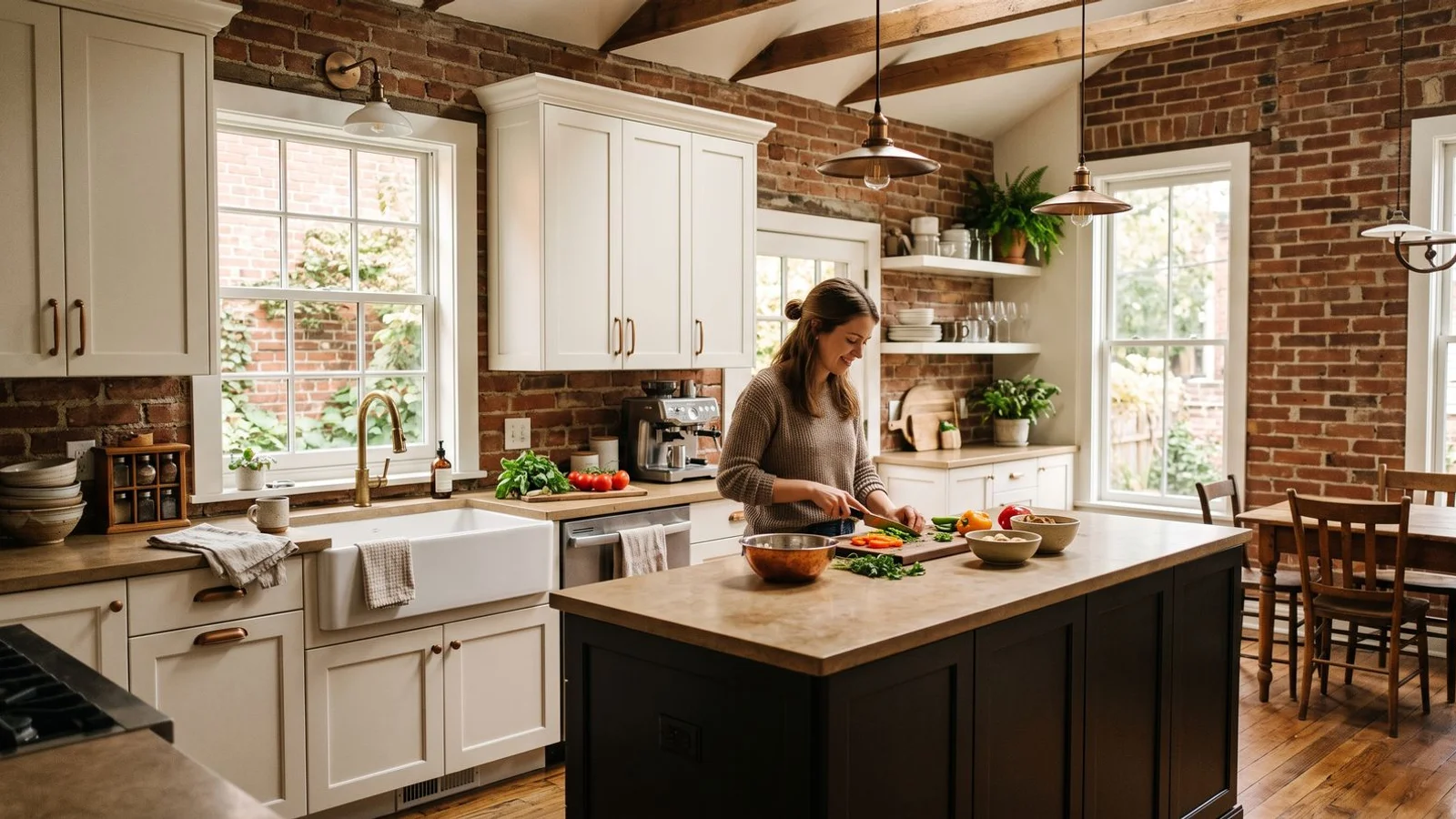
You know how challenging it is to balance modern convenience with a historic footprint. If you own a century home in German Village, Clintonville, Grandview Heights, or Upper Arlington, updating it requires serious thought. At Columbus Kitchen Pros, our premier kitchen and bathroom remodeling team transforms these older homes daily.
Many homeowners starting a “remodeling older home kitchen columbus” search quickly realize the constraints are real.
Historic-district reviews, non-standard framing, and compact original layouts demand a specific approach. According to the 2025 Cost vs. Value report, a minor kitchen remodel in our region yields an impressive 113% return on investment. This proves that thoughtful updates deliver far more value than tearing everything out.
We are going to break down the main challenges and walk through the exact solutions our team uses. Let’s explore what details to preserve, how to handle city permits, and the smartest ways to maximize your space.
Preservation-first thinking
The first decision in any older-home kitchen remodel is determining exactly what to preserve. Original trim, moldings, plaster details, and layout proportions carry the character that makes these homes valuable. Losing them is an unnecessary reduction in the home’s authenticity and its resale value.
We start every historic-home consult by walking the space to identify the key architectural elements worth keeping. This initial assessment guides the entire design plan. Our experts frequently discover original hardwood floors extending directly under the current cabinets. Sometimes, a plaster ceiling with intricate crown molding dictates where new lighting can go.
Common Historic Elements to Save
Protecting these features ensures your home retains its unique identity.
- Original Floors: Century-old hardwood or tile offers character that modern materials cannot replicate.
- Plaster Details: Keeping original plaster ceilings often means routing new wiring carefully to avoid damage.
- Doorway Proportions: Maintaining the original height and width of entryways keeps the historical flow intact.
- Wood Trim: Custom cutting new baseboards to match original profiles is a standard practice for historic properties.
We prioritize these elements because replacing them with generic builder-grade materials erodes the property’s charm. The German Village Commission, for example, strictly monitors exterior and massing changes to protect this exact aesthetic integrity.
Columbus BZS permitting
Any structural, plumbing, or electrical change within city limits requires a permit through Columbus Building and Zoning Services (BZS). In historic areas like German Village, parts of Italian Village, and Bexley, historic-district review may also apply for anything affecting exterior character.
We manage the entire permit process so you do not have to worry about the paperwork. The timeline for a standard residential plan review through BZS typically takes 10 to 15 business days. Our project managers factor this review period in right away to prevent construction delays.
What Triggers a Permit in Columbus
Understanding the local rules helps set accurate budget expectations.
| Project Scope | Permit Required? | Typical Examples |
|---|---|---|
| Structural Changes | Yes | Moving a load-bearing wall, changing a doorway opening. |
| Plumbing Updates | Yes | Relocating a sink, installing a new prep station. |
| Electrical Work | Yes | Adding new circuits, upgrading the main electrical panel. |
| Cosmetic Upgrades | No | Cabinet refacing, replacing countertops, installing new backsplash tile. |
We always recommend securing the proper approvals before opening any walls. Skipping this step often leads to costly fines and complications when you eventually sell the property.
Structural realities
Older Central Ohio homes were framed long before modern building standards existed. You have to plan for outdated systems before installing luxury finishes. Our crews routinely encounter infrastructure challenges that require immediate attention.
Balloon framing is very common in the oldest neighborhoods. This framing method lacks fire blocking between floors, which affects how walls are opened and insulated.
We also frequently find non-standard stud spacing, with framing sitting on 12-inch or 24-inch centers instead of the modern 16-inch standard. Undersized joists are another frequent issue. These floors need serious reinforcement before they can support a heavy stone kitchen island.
The Knob-and-Tube Challenge
Electrical systems from the 1880s through the 1940s present a major safety hazard.
- Safety Risks: Knob-and-tube wiring lacks a ground wire and cannot handle the amperage of modern kitchen appliances.
- Insurance Issues: Many homeowner insurance policies will drop coverage if active knob-and-tube wiring is discovered.
- Replacement Costs: A full home electrical replacement in Columbus averages between $12,000 and $36,000, depending on home size and wall accessibility.
- Plaster Damage: Running new wire requires opening brittle plaster walls, which means budgeting for significant drywall repair and painting.
We view these structural realities as expected steps rather than deal-breakers. These necessary upgrades simply require clear planning and honest pricing up front. Our in-house teams have successfully updated hundreds of older kitchens in the region.
Compact original layouts
Century-home kitchens were designed for how families operated in 1910. These rooms functioned as small, isolated workspaces with servants’ pantries, offering no expectation of a family gathering area. Modern homeowners want functional layouts with room for multiple cooks and casual dining.
We rely on creative design solutions to reconcile these tiny footprints with modern demands. Opening the wall to an adjacent dining nook is a popular strategy to double the usable space.
Smart Strategies for Small Spaces
Maximizing a historic kitchen requires thinking beyond standard layouts.
- Knock Down Partitions: Merging a cramped kitchen with an old butler’s pantry creates a spacious, open floor plan.
- Maximize Corners: Installing specialized hardware turns wasted corner cabinets into easily accessible storage.
- Go Vertical: Extending upper cabinets completely to the ceiling provides a place for seasonal items.
- Custom Fit: Building box sizes specifically to unlevel floors and skewed walls prevents awkward gaps.
Our designers look for every possible inch of storage. Building units to fit non-standard dimensions is essential because off-the-shelf modules rarely fit perfectly. Custom cabinetry ensures every awkward alcove is utilized.
We also take advantage of the taller ceilings common in historic properties. Installing full-height cabinets recovers valuable vertical storage that stock options miss.
Modernizing function without losing character
The main objective is to build a kitchen that functions perfectly for 2026 while visually reading like 1910. It takes careful material selection to blend new additions with historic architecture. Our design process focuses heavily on these subtle visual cues.
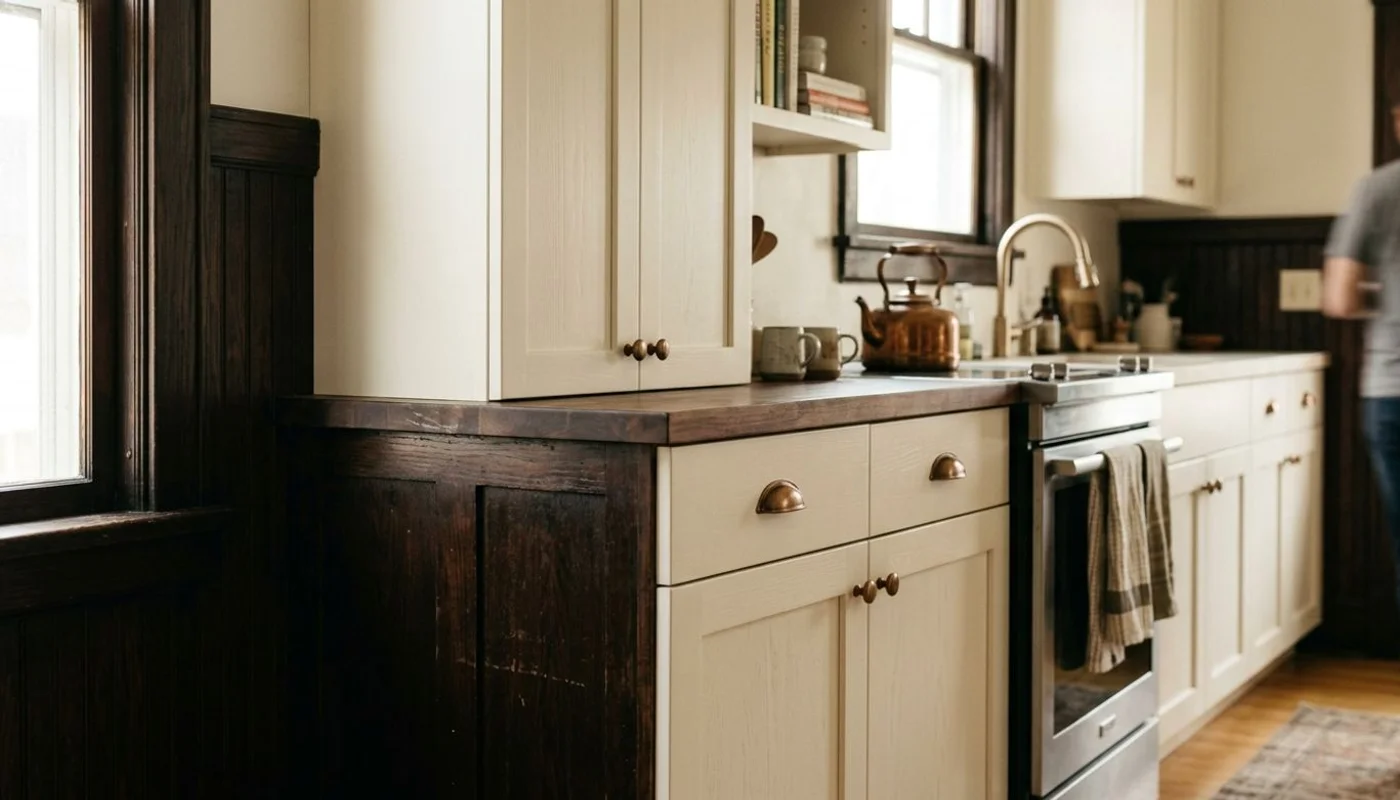
Matching custom cabinet doors to the original window casings makes the new storage look intentional. We usually recommend custom-painted cabinets instead of modern wood stains, as paint integrates much better with aged woodwork.
Keeping the original floors is another powerful way to preserve character. Existing hardwood or original ceramic tile adds a layer of history you cannot replicate.
Historic Integration Techniques
- Appliance Camouflage: Install custom wood panels over the refrigerator and dishwasher.
- Strategic Outlets: Place electrical outlets out of sight beneath upper cabinets instead of interrupting a beautiful backsplash.
- Hidden Ventilation: Route exhaust fans through custom wood hoods that match the surrounding cabinetry.
- Period Hardware: Select unlacquered brass or oil-rubbed bronze fixtures that age naturally over time.
When to consider a refacing refresh instead
Not every older-home kitchen needs a full, structural remodel. A minor kitchen remodel currently averages around $27,000 in the local market, making it an incredibly cost-effective option for many homeowners. Our assessment will quickly determine if a lighter touch is appropriate.
If your current layout works well and the cabinet boxes are structurally sound, you have excellent options. Solid-wood cabinet boxes built in the mid-century frequently outlast their original doors. In these scenarios, cabinet refacing delivers a brand-new aesthetic at 30% to 50% less cost than a total replacement.
“A targeted cosmetic refresh often yields a higher return on investment than a complete structural tear-out, especially when the original kitchen footprint is already functional.”
We highly recommend this route when you want to avoid the lengthy process of building permits and structural modifications. A refacing project updates the entire look of the room in a fraction of the time, allowing you to enjoy a fresh space without living through a major construction zone.
Getting started
Securing the right plan is the single most important step for a successful historic home kitchen remodel Columbus residents can rely on.
We provide a free in-home consultation designed exactly for the unique challenges of Columbus properties. This meeting allows us to walk through your kitchen to identify what to preserve and what to update.
Our estimators will flag any structural issues, explain the local permitting realities, and provide an honest quote. If you own an older Central Ohio home, you need a contractor who understands its specific needs.
We would love to discuss how to modernize your space without losing the character that makes it so valuable. Reach out today to schedule your walkthrough.
Frequently Asked Questions
Do I need a permit to remodel a kitchen in Columbus? +
Structural, plumbing, or electrical changes typically require a Columbus BZS permit. Cosmetic-only work (cabinet refacing, new counters in place, backsplash) generally does not. We handle the permit process when needed.
Can you keep the character of a historic kitchen? +
Yes. We routinely preserve original trim, moldings, plaster details, and proportions in German Village, Clintonville, and Grandview. Modernizing function while honoring character is core to how we work in historic homes.
Are older kitchens harder to remodel? +
Often, yes. Non-standard framing, dated wiring, plaster walls, compact layouts, and permit requirements all add complexity. Our in-house crews handle this routinely — it's a specialty, not a surprise.